PINK

The PINK project aims to revolutionize the development of advanced materials and chemicals. By leveraging computational modeling, artificial intelligence, and data-driven approaches, PINK supports the European Union's twin green and digital transformation goals. PINK addresses the need for Safe-and-Sustainable-by-Design (SSbD) chemicals and materials by integrating multi-objective optimization across functionality, cost-efficiency, safety, and sustainability. It employs a tiered evaluation framework, advancing confidence in predictions through iterative design cycles. Key components of PINK include the development of scalable computational tools, robust infrastructure for data and model sharing, and open platforms to promote interoperability and collaboration across industries and research domains. This holistic approach facilitates the adoption of SSbD practices while fostering innovation in materials science, sustainability, and regulatory compliance.

PINK has received funding from the European Union’s Horizon Europe Research and Innovation programme under grant agreement nº 101137809. More information at: pink-project.eu

Services

  • PINK Cheminformatics Suite

    A tool hosting the cheminformatics models developed under the PINK project for the virtual screening of sets of chemical compounds. Users can import compounds of interest by drawing molecules and inspect a 3D visualization of their molecular structures post-drawing.

    Visit service   Publication   API

  • Zeta-Predict Extended Tool

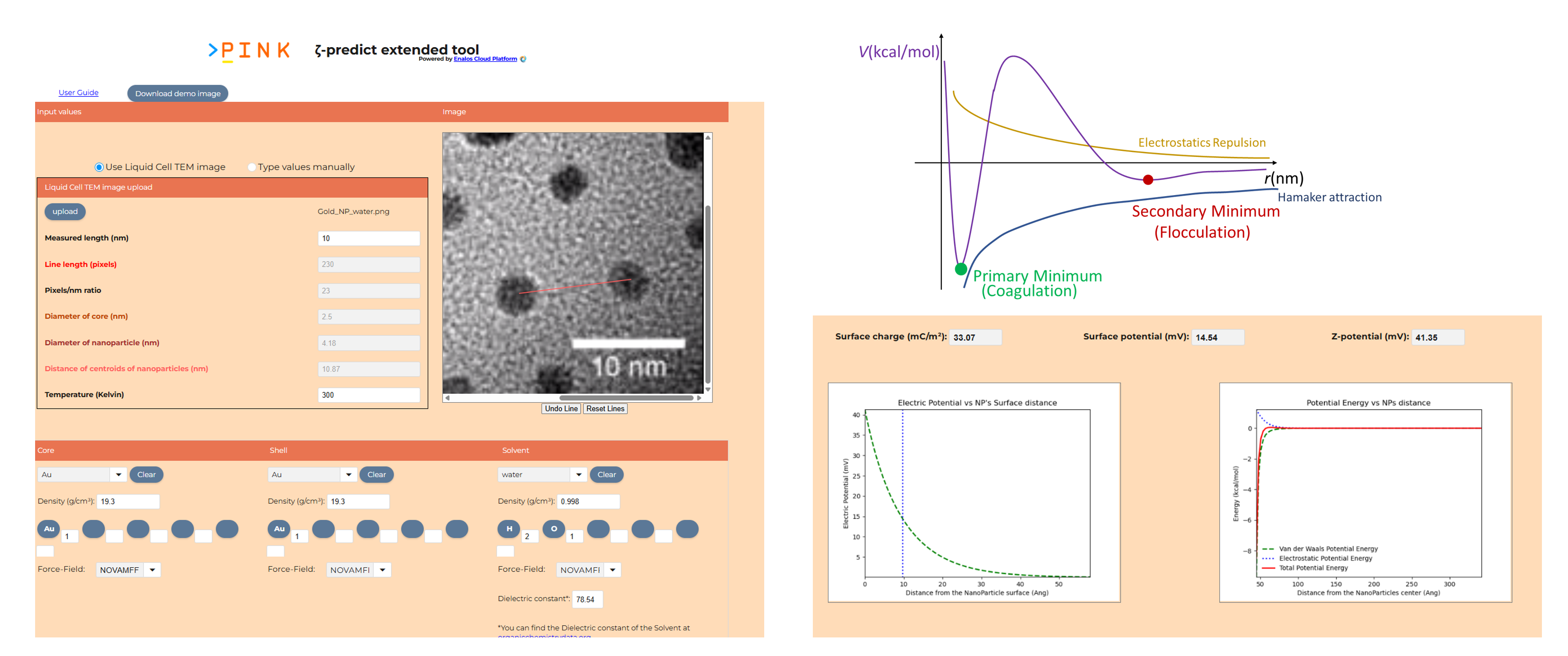
    Zeta Predict extended tool is an extended version of the Zeta Predict tool, enhanced by the integration of NovaMFF, a force field that provides high-precision calculation of particle–particle interactions. It enables the calculation of zeta potential by combining electron microscopy data, DLVO theory, and atomistic force fields.

    Visit service  

  • Hamaker Extended Tool

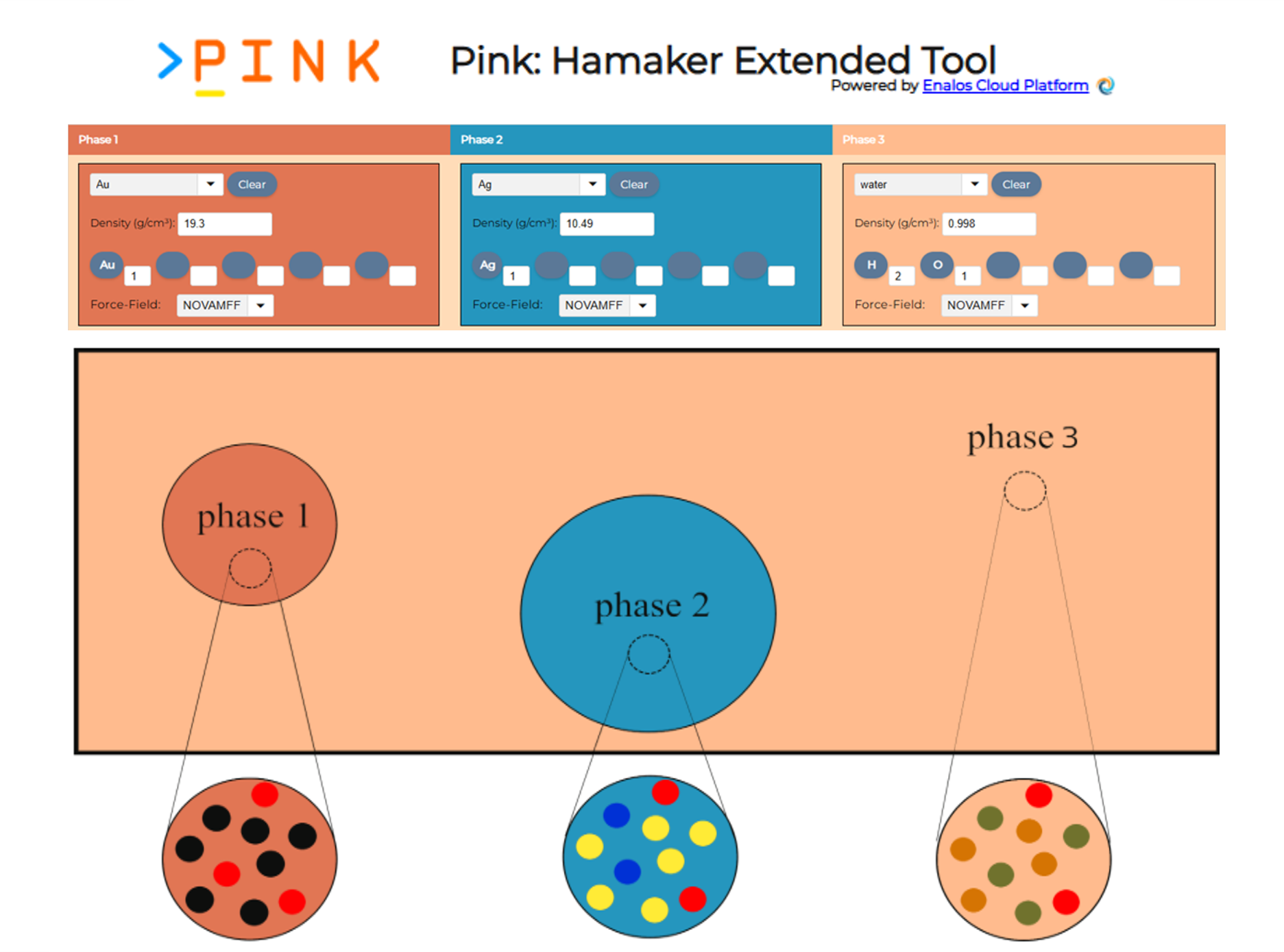
    This web-based GUI tool extends the previous Hamaker constant calculation tool by incorporating NOVAMFF, a force field for the accurate prediction of Hamaker constants. It computes the Hamaker constant between two different types of nanoparticles in a dispersion medium using user-provided chemical formulas and densities for the nanoparticles and the dispersion medium.

    Visit service  

Privacy policy